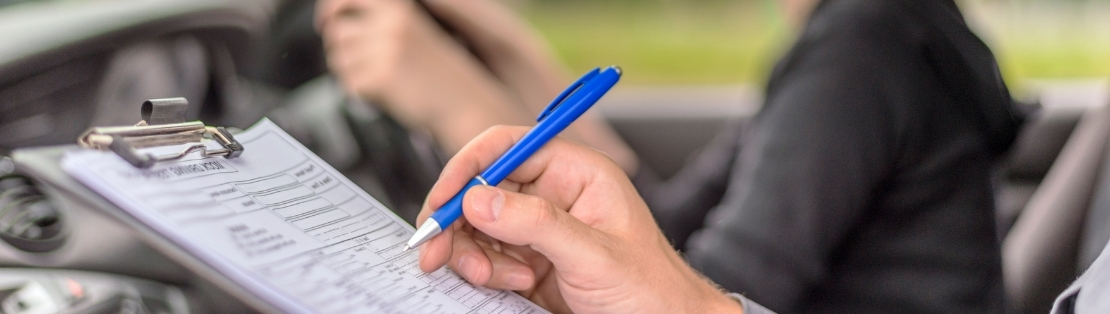
How to Pass Your Driving Test First Time in the UK: 15 Practical Driving Test Tips
Passing your practical driving test is an exciting step towards gaining more freedom on the road. It is normal to feel nervous, especially if you are unsure what the examiner expects or worry about making a mistake.
The good news is that regular practice and the right preparation can help you feel more confident behind the wheel. Whether you need help with roundabouts, reversing manoeuvres, mirror checks or staying calm on test day, these 15 practical driving test tips will help you prepare for your test, avoid common mistakes, and improve your chances of passing on the first attempt.
How to Prepare for Your Practical Driving Test?
Good preparation starts well before test day. Regular practice helps you build consistent driving habits and make safe decisions without relying on your instructor's guidance.
Here are some practical ways to prepare:
- Take regular driving lessons: Work with a qualified instructor who can identify areas that need improvement and help you practise them.
- Practise different road conditions: Gain experience on residential roads, busy town centres, dual carriageways, roundabouts, and unfamiliar routes.
- Take mock driving tests: A mock test helps you experience the pressure of an assessment and identify skills that need more attention.
- Review your mistakes: Ask your instructor to explain any recurring faults and practise until you can correct them consistently.
- Study the Highway Code: Understand road signs, speed limits, priorities at junctions and the rules that apply to different road users.
- Practise independently: Become comfortable following directions from a sat nav or road signs without continuous prompts from your instructor.
Only book your practical driving test when you can drive safely and confidently without instruction.
15 Practical Driving Test Tips to Help You Pass First Time
Preparing for your practical driving test involves more than knowing the rules of the road. You need to demonstrate safe driving habits, good observation and confident decision-making in different traffic conditions. These 15 essential driving test tips are divided into preparation and on-the-road advice to help you focus on the key skills to practise before your test and avoid common mistakes that could affect your result.
Driving Test Tips to Follow Before Your Test
Preparing in advance can help you feel more confident and identify areas that need improvement. Regular practice, familiarity with the test requirements and a good understanding of your driving habits can help you get ready for the assessment.
1. Practise Reversing Manoeuvres
Your practical driving test includes one reversing exercise. You may be asked to parallel park, park in a bay or pull up on the right and reverse before rejoining traffic.
Practise all three manoeuvres rather than concentrating on just one. During each exercise:
- Check your surroundings before moving.
- Use your mirrors and look around regularly.
- Move slowly enough to maintain control.
- Watch for pedestrians, cyclists and other vehicles.
- Stop when necessary to reassess the situation.
- Adjust if needed, provided it is safe to do so.
Accurate positioning matters, but observation and control are equally important. Practise until you can complete each manoeuvre safely without relying on step-by-step instructions.
2. Understand the 'Show Me, Tell Me' Questions
Your examiner will ask two vehicle safety questions during the test. One is a 'tell me' question at the beginning, and the other is a 'show me' question while you are driving.
The questions assess your knowledge of basic vehicle safety and maintenance. You may be asked how to check the brakes, identify the correct tyre pressure, operate the lights or use the windscreen demisters.
Revise the official DVSA question list and practise explaining your answers clearly. For the 'show me' question, demonstrate the relevant control only when asked and without losing control of the vehicle.
3. Practise Driving on Different Road Types
Your driving test may involve residential streets, busy town centres, dual carriageways, and roads with different speed limits. Practise driving in varied conditions with your instructor so you can adjust your speed, positioning and observations to suit the road.
4. Practise Driving Without Instructor Prompts
Independent driving requires you to make decisions without continuous guidance. Practise following sat nav directions and road signs while maintaining a safe speed, road position, and awareness.
If you miss a direction, continue safely rather than making a sudden correction. Ask your instructor to help you identify any situations in which you still rely too heavily on prompts.
5. Learn to Identify Hazards Early
Look well ahead and pay attention to pedestrians, cyclists, parked vehicles, roadworks, and changing traffic conditions. Identifying potential hazards early gives you more time to assess the situation and respond safely.
Practise scanning the road ahead, checking your surroundings and anticipating how other road users might behave. This will help you make better decisions when traffic conditions change unexpectedly.
Driving Test Tips to Follow During Your Test
Once your test begins, focus on demonstrating safe and consistent driving. The examiner will assess how you observe, control the vehicle, respond to hazards, and make decisions independently. The following tips can help you apply your preparation in real driving situations.
6. Check Your Mirrors Regularly
Mirror checks help you understand what is happening around your vehicle before you change speed, turn, change lanes, or move away from the kerb.
Make a habit of checking the appropriate mirrors before signalling, changing direction, or adjusting your position. Follow the mirrors-signal-manoeuvre routine where appropriate and check your blind spots when necessary.
Avoid checking your mirrors mechanically without acting on what you see. Your observations should help you make safe driving decisions.
7. Approach Junctions Carefully
Junctions require good observation, judgement, and control. Approaching too quickly or entering without checking properly can create unnecessary risks.
Reduce your speed early, look for road signs and markings, and assess the traffic from both directions. Choose the correct road position and gear where applicable.
When emerging from a junction, make sure the road is clear and that you can proceed safely. Do not rush because another vehicle is waiting behind you.
8. Practise Roundabouts
Roundabouts can be challenging because you need to assess traffic, select the correct lane and respond to changing conditions.
Before reaching a roundabout:
- Look for signs and road markings indicating your exit and lane.
- Choose the appropriate lane in good time.
- Adjust your speed as you approach.
- Give way to traffic according to the signs, markings, and applicable road rules.
- Check your mirrors and signal when appropriate.
- Check for cyclists, motorcyclists, and other road users before changing position or leaving the roundabout.
Practise different types of roundabouts with your instructor so you can make decisions confidently.
9. Maintain a Safe and Appropriate Speed
Driving at the correct speed is about more than following the posted limit. You must also consider visibility, traffic, road conditions, and potential hazards.
Look well ahead and adjust your speed before bends, junctions, parked vehicles, and areas with pedestrians. Leave enough time and distance to respond safely.
Avoid both speeding and unnecessarily slow driving when conditions allow you to make safe progress. Your speed should always be appropriate for the circumstances.
10. Keep a Safe Following Distance
Following another vehicle too closely reduces the time available to react if it breaks suddenly.
In dry conditions on faster-moving roads, use the two-second rule as a general guide for maintaining a safe gap. Increase the distance in wet weather and other conditions where stopping distances may be longer.
Pay attention to the vehicle ahead and the wider road environment. Avoid letting pressure from drivers behind you influence your following distance.
11. Use Signals at the Right Time
Signals help other road users understand your intentions. Signal clearly and at the appropriate time before turning, changing lanes, or moving away, but always check your surroundings first.
Remember that signalling does not give you priority. Make sure your manoeuvre is safe and that you have considered other road users before proceeding.
12. Make Safe Progress Without Unnecessary Hesitation
Driving too cautiously can affect your ability to make safe progress, particularly at junctions and roundabouts. Assess gaps in traffic carefully and proceed when it is safe to do so.
Never rush or take risks simply to avoid hesitation. Good judgement means recognising when it is safe to move and when you need to wait.
13. Listen Carefully to the Examiner
The examiner will explain what you need to do and provide directions throughout the test.
Listen carefully, ask for clarification if you have not understood an instruction, and take enough time to act safely. You are not expected to drive perfectly without any small errors, but you must demonstrate that you can drive safely and independently.
If an instruction requires you to turn, change lanes or stop, assess the road situation before acting. Never make a sudden or unsafe manoeuvre simply to follow a direction immediately.
14. Follow Independent Driving Directions
Independent driving forms part of the practical test. You may need to follow a sat nav, traffic signs or a combination of both. Practise following directions while maintaining awareness of the road. Look ahead, anticipate junctions, and position your vehicle in good time.
If you miss a turn, do not panic or make a sudden manoeuvre to correct it. Continue driving safely and follow the examiner's directions. Taking a wrong turn does not automatically mean you have failed.
Your priority should always be safe driving rather than following the route perfectly.
15. Stay Calm and Recover from Small Mistakes
Feeling nervous before a driving test is normal. However, allowing one mistake to affect the rest of your drive can lead to further errors.
If you stall, select the wrong gear or miss a direction, remain calm and deal with the situation safely. Check your surroundings before moving again and continue concentrating on the road.
Do not assume you have failed because the examiner makes notes. They record observations throughout the test, and a minor mistake does not automatically result in a fail.
Focus on the next driving decision rather than dwelling on what has already happened.
Common Mistakes to Avoid on Your Driving Test
Knowing common driving faults can help you focus your practice on areas that need improvement.
- Inadequate observations: Failing to check mirrors, blind spots or approaching traffic can make a manoeuvre unsafe. Make observations at the appropriate time and act on what you see.
- Poor road positioning: Driving too close to the kerb, straddling lanes, or choosing the wrong lane can affect safety and progress. Practise maintaining a suitable position and following road markings.
- Incorrect judgement at junctions: Emerging when there is insufficient space, failing to give way or hesitating unnecessarily can affect your driving assessment. Practise judging safe opportunities with your instructor.
- Incorrect speed: Driving above the speed limit or failing to adjust your speed to road conditions can create hazards. Look ahead and choose a speed that allows you to respond safely.
- Losing control during manoeuvres: Poor steering, inaccurate positioning or inadequate observations while reversing can result in faults. Practise slowly and focus on control as well as awareness of your surroundings.
- Missing road signs and signals: Failing to respond to speed limit signs, traffic lights, road markings, or other road users can affect your result. Keep scanning the road and plan your actions in advance.
A driving fault does not automatically mean you have failed. Under current DVSA rules, you can pass with no more than 15 driving faults, provided you do not receive a serious or dangerous fault. Repeated mistakes can become more significant if they create a safety risk.
What to Expect on Your Practical Driving Test
Knowing how the test works can help you prepare and reduce uncertainty on the day.
The standard UK car driving test lasts around 35 minutes of driving. It includes four main parts.
1. Eyesight Check
You will be asked to read a number plate from the required distance before the driving assessment begins. You must pass this check to continue with the test.
If you need glasses or contact lenses to meet the eyesight requirement, make sure you have them with you.
2. 'Show Me, Tell Me' Questions
The examiner will ask two vehicle safety questions. You will answer one before driving and demonstrate the other while driving.
Review the official questions in advance so you know how to explain or demonstrate the relevant checks.
3. General Driving Ability and Independent Driving
You will drive in different road and traffic conditions, demonstrating safe control, observation, judgement, and decision-making.
Part of the test involves following directions independently using a sat nav or traffic signs. You will not be required to drive on motorways during the standard test.
4. Reversing Exercise
The examiner will ask you to complete one reversing manoeuvre. This may involve parallel parking, parking in a bay or reversing on the right before rejoining traffic.
An emergency stop may also be requested.
For the latest details, refer to the official GOV.UK guide to what happens during the car driving test.
What to Do on the Day of Your Driving Test
Your preparation on test day can help you feel organised and ready to drive.
Before leaving home
- Check your appointment time and plan your journey to the test centre.
- Take your provisional driving licence and check the latest requirements for your appointment.
- Make sure you have any glasses or contact lenses you need to meet the eyesight standard.
- Eat something if needed and allow enough time to arrive without rushing.
Before the test begins
If you are using your instructor's car, make sure it meets the test requirements and that you are familiar with its controls.
Adjust your seat, steering position and mirrors before moving off. Check that you understand how to operate essential controls, including the lights, wipers and demisters.
Take a few moments to settle yourself and focus on the task ahead.
During the test
Listen to the examiner's instructions and concentrate on your driving. Check your mirrors, maintain a safe speed, and give yourself enough time to make decisions.
If you make a mistake, do not immediately assume you have failed. Continue driving safely and avoid allowing one error to distract you from the rest of the assessment.
How to Improve Your Chances of Passing First Time
There is no guaranteed way to pass your driving test on the first attempt. However, consistent practice and honest feedback can help you become a safer, more confident driver.
Use this checklist to assess your readiness:
- I can drive safely without continuous guidance from my instructor.
- I check mirrors and blind spots at appropriate times.
- I approach junctions and roundabouts with good observation and judgement.
- I maintain a suitable speed and following distance.
- I can complete all three possible reversing exercises safely.
- I understand the 'show me, tell me' vehicle safety questions.
- I can follow sat nav directions and road signs independently.
- I can recognise hazards and respond calmly to unexpected situations.
- My instructor agrees that I am ready for the test.
If you are still making repeated mistakes in any of these areas, spend more time practising before your appointment. Ask your instructor for a mock test and a clear assessment of your remaining weaknesses.
Ready for the Road After You Pass?
Passing your driving test is the beginning of your driving journey. Once you start driving independently, maintaining your vehicle, and understanding your responsibilities as a driver become increasingly important.
Regular servicing, prompt attention to warning lights and routine vehicle checks can help you keep your car in good condition.
If you are considering additional protection against unexpected repair costs, Warranty Direct offers vehicle warranty options for eligible cars, subject to the terms and conditions of the selected cover.
Visit Warranty Direct to review the available options and check which cover may suit your vehicle.
Frequently Asked Questions About Driving Test Tips
1. How can I pass my driving test first time?
Practise regularly, work on feedback from your instructor, learn the Highway Code and become comfortable driving in different road conditions. Take mock tests to identify weaknesses and book your test when you can drive safely without instruction.
2. What are the most important practical driving test tips?
Focus on effective observations, safe speed, correct positioning, good judgement at junctions, mirror checks and control during manoeuvres. Staying calm and following instructions safely are also important.
3. How many driving faults can you make and still pass?
Under current DVSA rules, you can pass with up to 15 driving faults, provided you do not receive a serious or dangerous fault. Repeated faults may become more serious if they create a risk to safety.
4. What happens if I make a mistake during my driving test?
A small mistake does not automatically mean you have failed. Continue driving safely, respond appropriately to the situation and focus on the rest of the test. Your result depends on the faults recorded throughout the assessment.
5. How long does the UK practical driving test last?
The standard car driving test includes around 35 minutes of driving. It also includes an eyesight check and two vehicle safety questions. An extended test may last longer.
6. Should I take a mock driving test before the real test?
Yes. A mock test helps you practise driving under assessment conditions and identifies areas that need improvement. Ask your instructor to assess your observations, positioning, judgement, and independent driving.
7. What should I take to my practical driving test?
You will normally need your provisional driving licence and any glasses or contact lenses required for the eyesight check. Check the latest official DVSA instructions before your appointment, including requirements for your test vehicle.