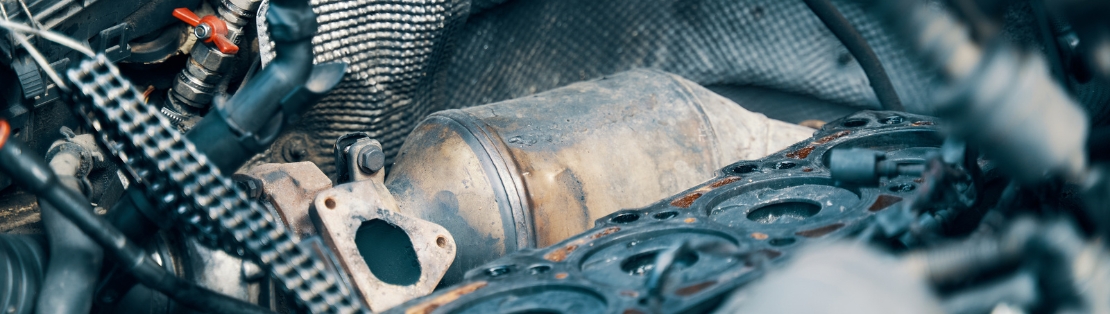
What is a Diesel Particulate Filter (DPF) on a car? And why is it so Expensive to Repair?
If you own a diesel car, it's likely to have a diesel particulate filter (DPF) fitted to its exhaust system. But what does a DPF do, and what causes it to become blocked?
A DPF captures soot and other harmful particles from diesel exhaust gases. It then uses a process called regeneration to burn off the accumulated soot and keep the filter working effectively.
In this guide, we explain how DPFs work, common DPF problems, warning signs, regeneration, and how to maintain your diesel vehicle.
What Is a Diesel Particulate Filter?
A diesel particulate filter (DPF) is an emissions-control component fitted to the exhaust system of a diesel vehicle. Its primary purpose is to capture soot and other particulate matter produced during diesel combustion before those particles are released through the exhaust.
Unlike a conventional filter that is simply replaced when it becomes dirty, a DPF is designed to regenerate. During regeneration, accumulated soot is burned at a sufficiently high temperature, allowing the filter to continue trapping particulate matter.
DPFs became widely used as emissions regulations for diesel vehicles became increasingly strict. A properly functioning DPF therefore forms an important part of a modern diesel vehicle's emissions-control system.
What Does a Diesel Particulate Filter Do?
The main job of a DPF is to trap particulate matter from diesel exhaust gases.
During normal engine operation:
- 1. Diesel combustion produces exhaust gases containing soot and particulate matter.
- 2. The exhaust passes through the DPF.
- 3. The filter traps particulate matter.
- 4. Soot gradually accumulates inside the filter.
- 5. The vehicle initiates regeneration when conditions require it.
- 6. High exhaust temperatures burn accumulated soot and restore available filter capacity.
The DPF therefore does not simply collect soot indefinitely. It is designed to periodically remove accumulated soot through regeneration.
How Does a Diesel Particulate Filter (DPF) Work?
A DPF is installed within the vehicle's exhaust system and is designed to allow exhaust gases to pass through while trapping particulate matter.
As soot accumulates, the vehicle monitors the condition of the filter using its engine-management and emissions-control systems. When regeneration is required, the vehicle uses a regeneration strategy appropriate to its design and operating conditions.
There are two commonly discussed forms of regeneration:
1. Passive DPF Regeneration
Passive regeneration occurs when exhaust temperatures become sufficiently high during normal driving for accumulated soot to burn. This is more likely during sustained driving conditions, such as longer journeys at higher road speeds.
The exact conditions required vary between vehicles, so drivers should follow the instructions provided by the vehicle manufacturer rather than relying on a universal speed or journey length.
2. Active DPF Regeneration
Active regeneration is controlled by the vehicle's engine management system. When the DPF reaches a particular level of soot loading, the vehicle can deliberately increase exhaust temperature to help burn accumulated soot.
Depending on the vehicle, drivers may notice changes such as:
- A change in engine sound
- Increased cooling-fan activity
- A temporary increase in fuel consumption
- Higher idle speed
- Stop/start being temporarily disabled
- A hot smell from the exhaust
These signs can vary between vehicles and should not be treated as a universal checklist.
Why Does a DPF Become Blocked?
A DPF becomes problematic when soot accumulates faster than the vehicle can remove it through regeneration.
Several factors can contribute to this.
1. Frequent Short Journeys
Frequent short, low-speed journeys are one of the most common contributors to DPF problems.
If the vehicle is repeatedly driven for short distances, the engine and exhaust system may not reach the conditions required for effective regeneration.
This is particularly relevant for vehicles that are used for:
- Short commutes
- School runs
- Local shopping
- Stop-start urban driving
- Low-speed journeys
2. Interrupted Regeneration
Regeneration needs suitable operating conditions to complete. Repeatedly switching the vehicle off before regeneration has been completed can contribute to continued soot accumulation.
If this happens repeatedly, the vehicle may eventually display a DPF warning or require a professional diagnosis.
3. Engine or Emissions-System Faults
The DPF itself does not always cause the DPF problem.
Faults involving components such as:
- Sensors
- Fuel injection
- EGR systems
- Turbocharging systems
- Exhaust components
- Engine management
can affect combustion or regeneration and contribute to excessive soot accumulation. This is why replacing the DPF without diagnosing the underlying cause can be an expensive mistake.
4. Incorrect Engine Oil
Some diesel vehicles fitted with DPFs require a specific manufacturer-approved or low-ash engine oil. Using unsuitable oil can contribute to emissions-system problems over time.
Always use the oil specification recommended by the vehicle manufacturer.
5. Poor Vehicle Maintenance
A DPF is part of a wider engine and emissions-control system. Poor servicing or an unresolved engine fault can increase the likelihood of DPF problems.
What Are the Signs of a Blocked DPF?
A DPF problem can produce several warning signs.
Common symptoms include:
- DPF warning light
- Engine warning light
- Reduced engine performance
- Increased fuel consumption
- Repeated regeneration attempts
- Changes in engine behaviour
- Reduced power
- Limp-mode operation in more serious cases
However, these symptoms do not automatically prove that the DPF itself is damaged.
For example, a warning light may be caused by excessive soot accumulation, a failed regeneration cycle or another fault within the emissions system.
Proper diagnosis is therefore important before deciding whether the filter needs cleaning or replacement.
What Does the DPF Warning Light Mean?
The DPF warning light indicates that the vehicle has detected a condition affecting its particulate-filter system.
Depending on the vehicle, it may indicate that:
- The DPF has accumulated a significant amount of soot.
- Regeneration is required.
- Regeneration has not been completed successfully.
- Another emissions system fault is affecting the DPF.
The meaning of the warning light varies by manufacturer, so check your vehicle handbook for the correct procedure.
Can You Drive with the DPF Warning Light On?
It depends on the vehicle and the specific warning condition. Some vehicles may provide instructions for allowing regeneration to take place under suitable driving conditions.
However, you should not ignore persistent warnings.
If the warning remains illuminated, additional warning lights appear; the vehicle loses significant power or enters limp mode, arrange professional diagnosis.
Do not rely on a universal "drive at X mph for X minutes" rule because DPF regeneration requirements differ between vehicles.
How Do You Clear a Blocked DPF?
The correct solution depends on why the DPF has become blocked and what condition the filter is in.
Step 1: Check the Vehicle's Instructions
If the vehicle is indicating that regeneration is required, consult the manufacturer's instructions first. Some vehicles provide specific driving conditions that allow regeneration to be completed.
Step 2: Diagnose the Cause
If the warning returns or regeneration repeatedly fails, the vehicle should be diagnosed.
A technician may need to investigate:
- DPF soot loading
- Differential pressure
- Temperature sensors
- Exhaust system faults
- EGR operation
- Fuel injection
- Engine faults
- Regeneration history
Step 3: Consider Professional DPF Cleaning
If the DPF is not physically damaged, but regeneration is no longer sufficient, professional cleaning may be an option.
Cleaning can remove accumulated deposits, but it will not repair a faulty sensor, injector, EGR system or other underlying problems.
Step 4: Replace the DPF if Necessary
Replacement may be necessary if the DPF is physically damaged or cannot be effectively restored. A replacement should generally be considered after proper diagnosis, rather than simply because a warning light has appeared.
Can a DPF Be Cleaned?
Yes, in some circumstances.
Professional DPF cleaning may be appropriate when the filter contains excessive deposits but remains structurally suitable for cleaning. However, cleaning is not a universal solution.
If the DPF became blocked because of an unresolved engine or emissions-system fault, the problem may return after cleaning. For example, if a faulty component is causing excessive soot production, cleaning the filter without repairing the underlying fault does not address the cause.
The decision should therefore be based on:
- The condition of the DPF
- The amount and type of accumulated material
- Diagnostic results
- The cause of the blockage
- Whether the filter is physically damaged
DPF Cleaning vs DPF Replacement
A DPF warning light does not automatically mean the filter needs replacing.
| DPF condition or problem | Potential solution |
|---|---|
| Soot accumulation | Regeneration |
| Regeneration not completing | Diagnose cause and address operating conditions |
| Sensor fault | Diagnose and repair |
| Engine/emissions-system fault | Repair underlying problem |
| Excessive deposits | Professional cleaning may be considered |
| Physically damaged DPF | Replacement may be required |
The important point is that diagnosis should come before replacement.
How Much Does DPF Repair or Replacement Cost?
DPF repair costs can vary significantly depending on the vehicle and the cause of the problem. A straightforward issue may require diagnosis or a repair rather than a replacement DPF.
If professional cleaning is appropriate, it can be cheaper than replacing the entire filter. However, a damaged DPF can be expensive to replace, particularly where an original manufacturer component and additional labour are required.
Because costs vary by make, model, engine and repair method, it is better to obtain a diagnosis and quotation for the specific vehicle rather than rely on a single headline figure.
How Long Does a Diesel Particulate Filter Last?
There is no universal mileage at which every Diesel Particulate Filter (DPF) needs to be replaced. DPF lifespan depends on several factors, including:
- Vehicle make and model
- Engine design
- Driving conditions
- Frequency and quality of regeneration
- Type of journeys
- Vehicle servicing
- Engine condition
- Soot accumulation
- Ash accumulation
- Faults affecting the emissions system
A well-maintained DPF can remain in service for a long time, while repeated regeneration problems or an underlying engine fault can cause problems much sooner.
Mileage alone should therefore not be used to predict when a DPF will fail.
Can Short Journeys Damage a DPF?
Frequent short journeys can increase the risk of DPF problems. Short, low-speed journeys may not provide the operating conditions required for effective regeneration.
This does not mean that every short journey immediately damages a DPF. The concern is repeated use of a diesel vehicle in conditions where regeneration cannot be completely complete. If most of your driving consists of short urban journeys, consider whether a diesel vehicle is appropriate for your driving pattern before buying one.
Is a Diesel Car with a DPF Suitable for Short Journeys?
It depends on how the vehicle will be used. If you're driving consists of regular longer journeys, a diesel vehicle may be well suited to your requirements.
If most journeys are short, low-speed, and urban, a diesel vehicle with a DPF may be less suitable because the operating conditions can make regeneration more difficult.
When choosing between diesel, petrol, hybrid or electric powertrains, consider your:
- Typical journey length
- Annual mileage
- Driving environment
- Frequency of motorway or longer journeys
- Vehicle running costs
The right choice depends on the complete driving pattern rather than fuel type alone.
How Can You Prevent Diesel Particulate Filter (DPF) Problems?
You cannot eliminate the risk of DPF problems, but good maintenance can reduce the likelihood.
• Follow the Manufacturer's Service Schedule
Regular servicing can identify engine and emissions-system problems before they contribute to DPF issues.
• Use the Correct Engine Oil
Always use the engine oil specification recommended by the vehicle manufacturer. This is particularly important for diesel vehicles fitted with particulate filters.
• Avoid Relying Exclusively on Short Journeys
If possible, ensure your vehicle regularly operates under conditions that allow its emissions system to function as intended.
Always follow the manufacturer's instructions rather than using generic regeneration advice.
• Do Not Ignore Warning Lights
A DPF warning light is an indication that the vehicle needs attention. Addressing a problem early can reduce the risk of further deterioration and potentially more expensive repairs.
• Maintain the Whole Engine System
The DPF does not operate independently. Problems with combustion, fuel injection, sensors, EGR systems, or other exhaust components can contribute to DPF problems.
Maintaining the wider vehicle is therefore an important part of maintaining the DPF.
Is DPF Removal Legal in the UK?
If a vehicle was originally fitted with a DPF, removing it is not an appropriate or legal way to resolve a DPF problem. For vehicles that were built with a DPF, its absence can result in an MOT failure.
UK guidance and major motoring organizations therefore advise removing or tampering with a factory-fitted DPF. If your DPF is blocked or malfunctioning, the appropriate approach is to diagnose the cause and repair, clean or replace the system as required.
Does a DPF Affect the MOT?
Yes, for vehicles originally fitted with a DPF, the MOT inspection includes checking for its presence. If the vehicle should have a DPF but it has been removed, it can fail the MOT.
A warning light or other emissions-related fault may also indicate that the vehicle needs attention before its MOT. Therefore, removing the DPF is not a sensible way to deal with a blocked filter.
Is a DPF the Same as a Catalytic Converter?
No. A DPF and catalytic converter perform different functions. A DPF primarily traps particulate matter and soot produced by diesel combustion.
A catalytic converter uses chemical reactions to reduce certain harmful pollutants in exhaust gases. Modern diesel vehicles can contain several emission-control components that work together, including the DPF and catalytic converter.
Are DPF Problems Covered by a Car Warranty?
Whether a DPF-related repair is covered depends on the type of vehicle warranty, the component affected, and the terms and conditions of the policy.
Coverage can vary depending on:
- The vehicle and its eligibility
- The component that has failed
- The cause of the problem
- Policy exclusions
- Diagnostic and repair requirements
- Repair or claim limits
If you're considering an extended car warranty, it's important to check which components are covered and what exclusions apply before choosing a policy.
For additional protection against unexpected vehicle problems, you can also explore breakdown cover alongside warranty protection. Breakdown cover can provide assistance if your vehicle breaks down, while a vehicle warranty is designed to cover eligible repairs to specified components, subject to the policy terms and conditions.
If your manufacturer's warranty has expired, an extended warranty for your car can provide an additional layer of protection against eligible mechanical and electrical repair costs.
Final Thoughts: Looking After Your DPF
A diesel particulate filter (DPF) is an important part of a modern diesel vehicle's emissions-control system. Looking after it properly can help reduce the risk of avoidable problems and expensive repairs.
Don't ignore a persistent DPF warning light, particularly if it is accompanied by reduced performance or other warning lights. A DPF warning does not automatically mean the filter needs replacing; regeneration, diagnosis, professional cleaning or repair may be appropriate depending on the cause.
Following the manufacturer's servicing and regeneration guidance, using the recommended engine oil and addressing recurring warning lights can promptly help keep your DPF working effectively.
If you're looking for protection against unexpected repair costs, explore Warranty Direct's vehicle warranty options to find out what cover may be available for your car. You can also consider breakdown cover for assistance if your vehicle becomes stranded following a breakdown. All cover is subject to eligibility, policy terms, conditions, and exclusions.
Frequently Asked Questions About DPFs
1. How do I know if my DPF is blocked?
Common signs include a DPF warning light, reduced engine performance, increased fuel consumption, and repeated regeneration problems. Severe blockage can result in reduced power or limp-mode operation.
2. What does the DPF warning light mean?
The DPF warning light indicates that the vehicle has detected a condition affecting the DPF system. It may indicate that regeneration is required or that another fault needs investigation.
3. Can I drive with the DPF warning light on?
The appropriate action depends on the vehicle and warning conditions. Check the manufacturer's instructions. If the warning remains on, additional warning lights appear or the vehicle loses power, seek professional diagnosis.
4. How does DPF regeneration work?
Regeneration raises the exhaust temperature sufficiently to burn accumulated soot inside the DPF. The exact regeneration process varies between vehicles.
5. How long does DPF regeneration take?
There is no universal regeneration time. It depends on the vehicle, regeneration strategy, and driving conditions. Always follow the manufacturer's instructions.
6. Can a blocked DPF be cleaned?
Yes, in some cases. Professional cleaning may be appropriate if the DPF is suitable for cleaning and is not physically damaged.
7. Does a DPF always need replacing?
No. Depending on the cause and condition of the filter, regeneration, diagnosis, repair or professional cleaning may resolve the problem. A physically damaged DPF may require replacement.
8. Can short journeys cause DPF problems?
Yes. Frequent short, low-speed journeys can make it more difficult for some vehicles to complete regeneration effectively.
9. Is DPF removal legal in the UK?
A DPF fitted to a vehicle when it was built should not be removed. A vehicle originally fitted with a DPF can fail its MOT if the filter is missing.